My dog ate chocolate: how much is actually toxic, by weight
The exact amount of each kind of chocolate that becomes dangerous at your dog's weight, what the next 72 hours look like, and what to do in the next ten minutes.

Key takeaways
- Roughly 0.6 oz (17 g) of dark chocolate, or 1.5 oz (43 g) of milk chocolate, reaches the toxic dose for a 10 lb (4.5 kg) dog. Call your veterinarian or a poison line at or above that amount: ASPCA Animal Poison Control (888) 426-4435 or Pet Poison Helpline (855) 764-7661.
- What matters is methylxanthine per kilogram of body weight, not the size of the bar: GI signs become likely around 20 mg/kg, 20-40 mg/kg brings a racing heart and arrhythmias, 40-60 mg/kg brings tremors and overheating, and above 60 mg/kg dogs seize.
- One 3.5 oz (100 g) dark chocolate bar carries roughly 525 mg of theobromine — about 58 mg/kg for a 20 lb (9.1 kg) dog, and 65 mg/kg once its caffeine is counted, which is past the seizure threshold rather than the upset-stomach one.
- Baker's chocolate is about 7 to 10 times milk chocolate (390-450 mg/oz against 44-60 mg/oz), and dry cocoa powder can reach 17 times (up to 737 mg/oz). A 70-85% dark bar runs about 225 mg/oz — half again what dark baking chips carry.
- Signs usually begin 2 to 4 hours after eating and can last 12 to 72 hours, because dogs clear theobromine with a half-life of about 17.5 hours against roughly 6 to 10 hours in a person — and because the drug recirculates through the gut and bladder.
- Do not decontaminate at home. 3% hydrogen peroxide can cause severe haemorrhagic gastritis and aspiration, salt can be lethal, home-syringed activated charcoal risks aspiration pneumonia, and emesis only helps in roughly the first 1-2 hours — all of it belongs under direct veterinary direction.
- White chocolate (~0.25 mg theobromine per ounce) cannot produce methylxanthine poisoning, but the fat load is a recognised pancreatitis trigger and swallowed foil or wrappers can obstruct the gut.
Roughly 0.6 oz (17 g) of dark chocolate, or about 1.5 oz (43 g) of milk chocolate, reaches the toxic dose for a 10 lb (4.5 kg) dog. What decides everything is theobromine per kilogram of body weight: around 20 mg/kg brings vomiting and diarrhoea, 20–40 mg/kg affects the heart, 40–60 mg/kg brings tremors and dangerous overheating, and above 60 mg/kg dogs seize. Three numbers give you that dose — the type of chocolate, the amount actually eaten, and what your dog weighs.
What to do in the next 10 minutes
- ASPCA Animal Poison Control Center — (888) 426-4435, 24/7, consultation fee around $95.
- Pet Poison Helpline — (855) 764-7661, 24/7, around $89 per incident including follow-up calls.
- Your own veterinarian or the nearest 24-hour emergency hospital. Their number belongs on the fridge before you need it.
Whether this is an emergency depends on those three numbers, not on the word "chocolate." Dark, semisweet, baking chocolate, cocoa powder and cocoa mulch are the dangerous end — roughly 3 to 17 times the theobromine of milk chocolate, with dry cocoa powder the extreme at up to 737 mg per ounce against milk chocolate's 44–60 mg. A 60 lb (27 kg) Labrador that licked one milk-chocolate chip off the kitchen floor has taken in roughly 1 mg of theobromine — far below the ~20 mg/kg mark at which gastrointestinal signs become likely, so the arithmetic says a soft stool is the most that dose can drive. A 10 lb (4.5 kg) terrier that ate a 4 oz (113 g) bar of baker's unsweetened chocolate has taken roughly 1,600 mg — about 350 mg per kg of body weight — which is above the reported lethal range. Same word; two completely different nights.
Here is the arithmetic in the middle, where most real cases sit. A 20 lb (9.1 kg) dog eats 1 oz (28 g) of dark chocolate. If it was baking-chip dark at about 150 mg of theobromine per ounce, that is 155 mg, or about 17 mg/kg — just under the mark where GI signs become likely. If it was a genuine 70–85% bar at about 225 mg/oz, and you count its caffeine (~20 mg/oz), it is 245 mg, or 27 mg/kg — inside the cardiotoxic band. You usually cannot tell which bar it was from the crumbs, so this case gets treated as the higher number. Low is not zero either: a sensitive dog can vomit on far less.
Time matters as much as dose. Signs usually start 2 to 4 hours after eating and can take 6 to 12 hours to appear, so a dog who looks completely normal right now tells you nothing about the next morning. The window in which a veterinarian can still empty the stomach is roughly the first 1 to 2 hours — longer for a big or fatty meal that empties slowly, so past two hours it is still worth going. Missing the emesis window does not mean missing treatment: activated charcoal, IV fluids, bladder emptying and ECG monitoring all work on an absorbed dose, and that is where most of this illness happens.
- 11. Get your dog's weightUse a real number if you have one — a scale, a recent clinic record, the bag of food you buy for their size. If you must estimate, estimate low; underestimating weight makes the calculated dose look worse, which is the safe direction to be wrong in. Give it in pounds; the conversion is ours to do.
- 22. Find the wrapper and read the label"Chocolate" is not enough. You need milk, dark, semisweet, baking/unsweetened, white, cocoa powder, cocoa nibs or cocoa mulch — and the cocoa percentage if it is printed. A 70% bar and a 45% bar are not the same exposure. Photograph the wrapper before it goes in the bin.
- 33. Work out how much actually went inStart with the size of the whole item — a standard bar is often 1.55 oz (44 g), a large bar 3.5 oz (100 g) — then subtract what is still on the floor, still in the box, or stuck to the wrapper. Count the wrappers if it was a multipack. Ounces or grams both work.
- 44. Note the time it happenedThe actual clock time, or the tightest window you can defend ("somewhere between 9:40 and 10:15"). This decides whether the stomach can still be emptied and when to expect signs. If you found the mess and did not see it happen, say that plainly — an unknown window is treated as the worst case.
- 55. Call, in this orderPhone your own veterinarian, the nearest emergency clinic, or an animal poison control line first. If you are not sure yet whether this needs a clinic — or you are already on the way and want the numbers run — start a chat with our toxicology specialists and we will work the mg/kg dose through with you. Weight, chocolate type, amount eaten, time eaten are the four values that turn "my dog ate chocolate" into an actual dose. Also mention wrappers or foil swallowed, and any heart, seizure or pancreatitis history.
- 66. Do not decontaminate at homeNever give hydrogen peroxide, salt, mustard or anything else to make your dog sick unless a veterinarian is directing you through it in real time. 3% hydrogen peroxide can cause severe haemorrhagic gastritis, and a vomiting dog can inhale stomach contents into the lungs. Salt is dangerous and must never be used. Do not give activated charcoal at home either — syringing it into a nauseated or tremoring dog causes aspiration pneumonia, and the repeat dosing this poison needs can drive sodium to dangerous levels, which takes bloodwork to catch. Decontamination is a clinical decision and belongs in clinical hands.
The wrapper is the most valuable thing in the room right now — it carries the chocolate type, the cocoa percentage and the total weight, which are three of the four numbers that set the dose. Photograph it before anyone tidies up. Weight, type, ounces eaten, and the time on the clock decide whether this is a phone call or a drive.
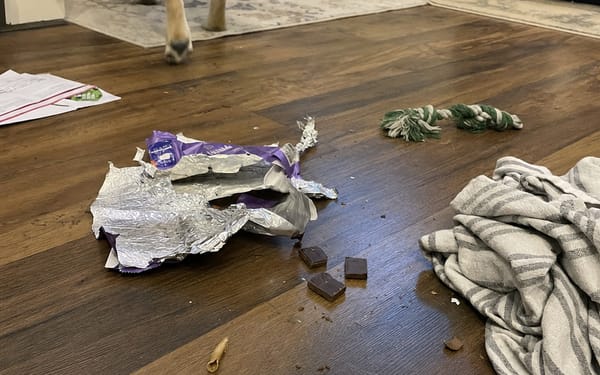
How much chocolate is toxic to a dog?
The poison in chocolate is theobromine, a methylxanthine — the same chemical family as caffeine, which chocolate also contains in smaller amounts. Both stimulate the heart and the central nervous system, and the published thresholds are usually quoted for theobromine alone even though the caffeine fraction adds 10–20% to the real dose. People clear theobromine in roughly 6 to 10 hours (mean about 7). In dogs the elimination half-life is about 17.5 hours, and caffeine's is about 4.5 hours. A dog does not metabolise a chocolate dose so much as sit inside it: five half-lives is about 87 hours — three and a half days — before theobromine has substantially cleared.
Theobromine also undergoes enterohepatic recirculation: it is excreted in bile, reabsorbed from the intestine, and put back into circulation. It is reabsorbed across the bladder wall as well. This is why hospital treatment involves repeated doses of activated charcoal and a urinary catheter, and why a dog can look worse at hour ten than at hour two.
None of the numbers that matter are on the wrapper. What matters is milligrams of methylxanthine per kilogram of dog — the concentration of the chocolate, multiplied by the amount eaten, divided by the animal's body weight. A Labrador and a Chihuahua that eat the identical brownie have not had the identical exposure; they are two different cases with two different plans.
What is in each kind of chocolate
| Chocolate type | Theobromine per oz | Caffeine per oz | Per 3.5 oz (100 g), theobromine | What this means for a dog |
|---|---|---|---|---|
| White chocolate | ~0.25 mg | ~0 mg | ~1 mg | No methylxanthine dose is reachable from white chocolate. The fat and sugar can still trigger vomiting, diarrhoea, or pancreatitis in a susceptible dog. |
| Milk chocolate (bars, most candy) | ~44–60 mg | ~6 mg | ~155–210 mg | The most common exposure by far. A large dog has to eat a lot by volume; a small dog and a family-size bar is a genuine dose. |
| Semisweet / dark chocolate chips | ~150–160 mg | ~20 mg | ~530–565 mg | Roughly three times milk chocolate. A whole bag of baking chips is a hospital case for most dogs. |
| Dark chocolate bar, 70–85% cacao | ~225 mg | ~20 mg | ~800 mg | One 3.5 oz (100 g) bar puts any dog under about 29 lb (13 kg) over the 60 mg/kg seizure threshold. |
| Baker's unsweetened chocolate | ~390–450 mg | ~35 mg | ~1,375–1,590 mg | The most dangerous form in an ordinary kitchen. A single 1 oz square (~400 mg) brings a 15 lb (6.8 kg) dog to about 59 mg/kg. |
| Dry cocoa powder | ~400–737 mg | ~35 mg | ~1,410–2,600 mg | Overlaps baker's chocolate at the low end and reaches well above it at the high end. A knocked-over container is an emergency at almost any dog size. |
| Cocoa bean mulch (garden) | ~54–845 mg (0.19–2.98% by weight) | varies | ~190–2,980 mg | Varies roughly 15-fold by brand and processing, so a mulch dose can only be calculated as a range. Dogs eat it because it smells like chocolate. |
| Cocoa nibs | ~400+ mg (varies widely) | ~35 mg | ~1,400+ mg | Treat as baker's chocolate. Health-food packaging does not lower the dose. |
Ranges are real: theobromine varies with bean, brand, and batch, and "dark" on a label covers everything from 45% to 90% cacao. When the exact product is unknown, run the calculation on the high end of the range, not the average.
Reading the cocoa percentage off the wrapper
Theobromine tracks the cocoa solids, so the percentage printed on a dark bar is the single most useful thing on the label. It is usually on the front, as "70% cacao" or "70% cocoa solids". A 50% bar and an 85% bar differ by roughly two-fold, which is enough to move the same dog between two bands.
| Cacao on the label | Theobromine per oz | Amount that reaches 20 mg/kg in a 20 lb (9.1 kg) dog |
|---|---|---|
| 45–59% (sweet dark, most "dark" candy bars) | ~130 mg | ~1.4 oz (40 g) |
| 60–69% | ~180 mg | ~1.0 oz (28 g) |
| 70–85% | ~225 mg | ~0.8 oz (23 g) |
| 86–100% (including baker's unsweetened) | ~390–450 mg | ~0.4–0.5 oz (11–13 g) |
If the percentage is not printed, assume the top of the plausible range for that product type.
The four thresholds
These bands are what emergency clinicians use to decide whether a dog goes home with monitoring or onto a fluid line with an ECG. Signs typically begin 2 to 4 hours after ingestion, sometimes as late as 6 to 12, and can last 12 to 72 hours. A dog who looks completely normal 45 minutes after eating a bar has told you nothing at all.
| Dose (mg theobromine per kg) | What is expected | What care usually looks like |
|---|---|---|
| Up to ~20 mg/kg | Generally no clinical signs; gastrointestinal upset possible in a sensitive dog. GI signs — vomiting, diarrhoea, increased thirst and urination, restlessness — become expected from about 20 mg/kg. | Monitoring, under veterinary direction. Decontamination is still worth discussing if the dog is inside the first hour or two. |
| 20–40 mg/kg | Cardiotoxic range: tachycardia (racing heart), hypertension, arrhythmias, marked hyperactivity and panting. | In-person examination. ECG, IV fluids, activated charcoal, a beta-blocker if the heart rate stays elevated. |
| 40–60 mg/kg | Muscle tremors, hyperthermia (dangerously high body temperature), severe agitation, ataxia (stumbling). | Emergency. Hospitalisation, active cooling, methocarbamol for tremors, continuous monitoring. |
| Over 60 mg/kg | Seizures. Reported lethal doses cluster around 100–200 mg/kg, but dogs have died below that range. | Emergency, immediately. Anticonvulsants, urinary catheter to stop bladder reabsorption, intensive care. |
These bands are deliberately more conservative than one major reference. The Merck Veterinary Manual places cardiotoxic effects at 40–50 mg/kg and seizures at ≥60 mg/kg. We put the cardiac line at 20 mg/kg because arrhythmias are documented in that range and because a dog with existing heart disease reaches them sooner. If you check these numbers against Merck — and you should — that is the difference you will find, and it errs toward being seen. The bands also overlap in practice, describe a healthy adult dog, and a dog can be in two of them at once as absorption continues.

The 20 to 40 mg/kg band is the one owners miss, because a dog with a heart rate of 190 at home just looks excited. The rhythm is where the damage shows, and the rhythm is not visible from across the room.
Worked example: a 20 lb dog and a bar of dark chocolate
Here is the arithmetic in full, the way our toxicology specialist runs it — a 20 lb terrier mix eats an entire 3.5 oz (100 g) bar of dark chocolate off the coffee table.
- Convert the dog. 20 lb ÷ 2.2 = 9.1 kg.
- Fix the amount eaten. The whole bar: 3.5 oz (100 g). Nothing left in the foil.
- Pick the concentration. Start with a conservative 150 mg/oz — the low end for dark.
- Total theobromine. 3.5 oz × 150 mg/oz = 525 mg.
- Divide by the dog. 525 mg ÷ 9.1 kg = 58 mg/kg.
- Read the band. 58 mg/kg sits at the top of the 40–60 mg/kg band: tremors, hyperthermia, severe agitation — two milligrams per kilo from the seizure threshold.
Now add the caffeine. Dark chocolate carries roughly 20 mg per ounce: 3.5 × 20 = 70 mg, or 7.7 mg/kg. The combined methylxanthine load is 595 mg — 65 mg/kg, over the seizure line rather than under it. And that was computed at 150 mg/oz. If the bar was a true 70–85% at ~225 mg/oz, theobromine alone is 787 mg, or 87 mg/kg, and with its caffeine about 94 mg/kg: well past the seizure threshold and close to the bottom of the reported lethal range of 100–200 mg/kg. This is a dog who needs to be seen now, not watched.
The same dog, a different snack. The 20 lb dog instead eats two squares off a milk chocolate bar — about 0.7 oz (20 g).
- The dog is unchanged. 20 lb (9.1 kg).
- Amount eaten. 0.7 oz (20 g).
- Concentration. Milk chocolate, ~44 mg/oz theobromine and ~6 mg/oz caffeine.
- Total methylxanthine. (0.7 × 44) + (0.7 × 6) = 31 + 4 = 35 mg.
- Divide by the dog. 35 mg ÷ 9.1 kg = 3.8 mg/kg.
- Read the band. Well under 20 mg/kg — below the level at which GI signs become likely, and nowhere near the cardiac one.
Same dog, same afternoon, same word — "chocolate" — and a 17-fold difference in dose: 65 mg/kg versus 3.8 mg/kg. One is an emergency room. The other is a dog who may vomit and may not. The number that goes wrong is almost never the chemistry; it is how much was actually eaten.

Chocolate toxicity chart: ounces per dog weight, by chocolate type
| Dog weight | Milk chocolate (at 60 mg/oz) | Dark / semisweet (at 150 mg/oz) | Standard 1.55 oz milk bars that reach the call-your-vet line |
|---|---|---|---|
| 5 lb (2.3 kg) | 0.75 oz (21 g) | 0.30 oz (8.6 g) | ~half a bar — call at any amount above this |
| 10 lb (4.5 kg) | 1.5 oz (43 g) | 0.6 oz (17 g) | ~1 bar — call at any amount above this |
| 20 lb (9.1 kg) | 3.0 oz (86 g) | 1.2 oz (34 g) | ~2 bars — call at any amount above this |
| 40 lb (18.1 kg) | 6.0 oz (171 g) | 2.4 oz (69 g) | ~4 bars — call at any amount above this |
| 70 lb (31.8 kg) | 10.6 oz (300 g) | 4.2 oz (120 g) | ~7 bars — call at any amount above this |
| 100 lb (45.4 kg) | 15.1 oz (428 g) | 6.0 oz (171 g) | ~10 bars (roughly 1 lb) — call at any amount above this |
This chart marks only the ~20 mg/kg line. It is not a safe-amount chart and the figures do not scale by a fixed multiple to the higher bands — for the cardiac (20–40), tremor (40–60) and seizure (over 60 mg/kg) bands, run the formula above rather than multiplying these numbers. The dark column is a low-end estimate: a true 70–85% bar at 225 mg/oz reaches the same dose at about a third less, and a 44 mg/oz milk chocolate takes about 36% more than the milk column shows. Basis: 1 lb = 0.4536 kg.
"He only ate a little" is the least reliable number in the calculation — it is an estimate made by someone who was not in the room. Weigh the packaging that is left, subtract it from the printed net weight, and assume the dog ate the difference. The dose that gets missed is the one that was estimated downward.
Send a photo of the wrapper and your dog's weight and our toxicology specialist will run the mg/kg with you in minutes, show you where that number falls against the published bands, and say what still needs an in-person exam. If your dog has any red-flag sign, ate baking chocolate or cocoa powder, or the product was sugar-free — drive to the emergency clinic now and message us from the car.
Get the dose calculatedSymptoms of chocolate poisoning in dogs, in the order they appear
Signs arrive in stages, and which stage a dog reaches is set by the dose. Each group below is tagged with the band that produces it and the hours after eating when it typically shows.
- Gastrointestinal — from about 20 mg/kg, usually 2–4 hours in. Vomiting (sometimes smelling of chocolate), diarrhoea, drooling, obvious thirst, frequent urination, restlessness or pacing that will not settle.
- Cardiovascular — 20–40 mg/kg, usually 4–12 hours in. A fast or pounding heartbeat, heavy panting, wide eyes, hypertension, an irregular rhythm, a dog who cannot lie down.
- Neuromuscular — 40–60 mg/kg, usually 4–12 hours in. Muscle tremors, stiffness, wobbliness or stumbling, severe agitation, a rising body temperature from the muscle activity itself.
- Seizures and collapse — over 60 mg/kg. Convulsions, collapse, inability to stand. This is an immediate emergency at any hour.
- Late complications — 12–72 hours in. Recurrent tremors or tachycardia as the drug recirculates; and, after a fatty chocolate meal, pancreatitis: repeated vomiting, a hunched posture, refusing food.
What happens next: the 72-hour timeline
Chocolate poisoning is slow, and that is the part almost nobody expects. A dog who ate a dark bar twenty minutes ago usually looks completely normal, and that normal-looking hour is exactly when treatment works best. Theobromine has to be absorbed before it can do anything, and once absorbed a dog eliminates it at a crawl — a half-life of roughly 17.5 hours, against about 6 to 10 hours in a person. The drug that arrives in the first few hours is still circulating a day and a half later.
| Time since eating | What is happening inside the dog | What you may see |
|---|---|---|
| 0–2 hours | Chocolate is sitting in the stomach and starting to move into the small intestine. Very little theobromine has reached the bloodstream. This is the decontamination window — the only period in which emptying the stomach removes a meaningful part of the dose. | Usually nothing at all. Wrappers, foil, or a chewed box are often the only evidence. A normal-looking dog here is not a reassuring sign; it is a timing fact. |
| 2–4 hours | Absorption is well underway and blood levels are climbing toward their peak. Methylxanthines irritate the gut wall directly and begin to stimulate the heart and central nervous system. | The first signs, usually gastrointestinal: vomiting (sometimes with a chocolate smell), diarrhoea, drooling, thirst, frequent urination, restlessness or pacing. |
| 4–12 hours | Peak effect for most dogs. Theobromine blocks adenosine receptors and raises circulating adrenaline: heart rate rises, blood pressure rises, skeletal muscle becomes twitchy. Above roughly 40–60 mg/kg the nervous system signs dominate. | Panting, a racing heartbeat, wide eyes, agitation, a dog who cannot settle. At higher doses: tremors, stiffness, wobbliness, elevated body temperature, and above roughly 60 mg/kg, seizures. |
| 12–24 hours | Blood levels fall by only about half per 17.5 hours. Theobromine excreted into urine is reabsorbed across the bladder wall, and theobromine excreted in bile is reabsorbed from the intestine, so the body keeps re-dosing itself. | Signs often plateau or seem to ease, then return. Continued restlessness, a heart rate that stays high, tremors that recur. Diarrhoea often persists. A high-fat chocolate meal can also trigger pancreatitis around now. |
| 24–72 hours | Slow clearance of the remaining drug. Supportive care reduces how much is recirculated, but the underlying half-life does not change. | A gradual return to normal in most treated cases: heart rate settles, tremors stop, appetite returns last. Signs lasting past 72 hours are unusual and warrant a re-check rather than waiting it out. |
Ranges are typical, not guaranteed. Onset can be delayed to 6–12 hours with a large or fatty meal that slows gastric emptying, and dogs with existing heart disease, epilepsy, or pancreatitis can show serious signs at lower doses than the thresholds suggest.
Enterohepatic recirculation: why your dog can look better, then get worse
This is the fact most owners are never told, and it is the reason people leave a clinic early or decide at 3am not to go: chocolate poisoning gets better and then comes back.
Two mechanisms drive it. The first is enterohepatic recirculation: the liver dumps theobromine and its metabolites into bile, bile goes into the intestine, and the intestine absorbs the theobromine straight back into the bloodstream. The drug takes a lap and returns. The second is the bladder — theobromine filtered into urine is reabsorbed across the bladder wall, so urine sitting in a dog's bladder is a reservoir slowly feeding the poison back in. Both have a direct treatment answer: repeated activated charcoal for the gut loop, and a urinary catheter plus IV fluids for the bladder loop. That is why hospital treatment is not just "watching".

The sign owners discount most is the heart rate. A dog pacing and panting at hour six is not anxious about the vet — that is sinus tachycardia from methylxanthine stimulation, and at 20 to 40 mg/kg it can progress to ventricular premature complexes and runs of ventricular tachycardia. A resting rate over 140 in a medium-sized dog after a chocolate ingestion is a reason for an ECG.
What a veterinary team will do: emesis, activated charcoal, fluids, and heart monitoring
Chocolate has no antidote. Every step below aims at one of three things: get the undissolved dose out, stop the absorbed dose from recirculating, and support the heart and nervous system while the dog clears it. Knowing what each step is for makes it easier to consent to the right care — and to ask why, if something is skipped.
- 1History and a dose calculationThe treating clinic needs the dog's weight, the type of chocolate, the maximum amount that could have been eaten, and the time. From that they calculate milligrams per kilogram and place the dog in a risk band. This number determines everything that follows, which is why bringing the wrapper matters more than almost anything else you can do.
- 2Inducing vomiting — only inside the window, only in the clinicIf the dog is within roughly 1–2 hours of eating (sometimes longer for a large, fatty meal that empties slowly) and is alert with a normal gag reflex, the clinic will empty the stomach with an injectable emetic such as apomorphine. Recovered chocolate is dose that never has to be treated. Beyond that window, or in a dog already tremoring, seizing, or sedated, emesis is not attempted — the aspiration risk outweighs the yield.
- 3Activated charcoal, often repeatedCharcoal binds theobromine in the gut so it passes out in the stool instead of being absorbed. Because of enterohepatic recirculation one dose is frequently not enough: charcoal may be repeated every 4–6 hours for the first 24 hours to intercept each lap. Repeat doses are usually given without the cathartic (sorbitol) to avoid dehydration, and the treating clinic will watch sodium levels.
- 4IV fluidsFluids correct dehydration from vomiting and diarrhoea, support blood pressure, and increase urine production so theobromine is flushed out rather than sitting in the bladder being reabsorbed.
- 5A urinary catheter, or frequent walkingTheobromine in urine crosses back through the bladder wall into the bloodstream. Keeping the bladder empty — an indwelling catheter in a hospitalised dog, or walking a less-affected dog to urinate very frequently — removes that reservoir. Together with repeated charcoal this reduces how much drug is recirculated; it does not shorten the 17.5-hour half-life, which is why monitoring still runs 24–72 hours.
- 6ECG and blood pressure monitoringContinuous or intermittent ECG catches arrhythmias that a stethoscope and a heart-rate number miss: ventricular premature complexes, runs of ventricular tachycardia, and occasional early bradycardia. Blood pressure is tracked because methylxanthines drive hypertension.
- 7A beta-1 selective blocker for a dangerous tachyarrhythmiaIf the heart rate stays high enough to compromise filling, or ventricular ectopy becomes significant, a short-acting beta-1 selective agent such as esmolol, or metoprolol, is used to slow conduction and control the rhythm. Non-selective agents such as propranolol are generally avoided in methylxanthine toxicosis because they reduce renal excretion of the drug you are trying to clear. These are given on the basis of an ECG, which is why the monitoring comes first.
- 8Methocarbamol for tremors; a benzodiazepine for seizuresMethocarbamol is a centrally acting muscle relaxant and the usual first choice for a tremoring dog, because tremors themselves generate dangerous heat. Seizures are controlled with diazepam or midazolam, sometimes with levetiracetam or a barbiturate if they recur. Body temperature is monitored throughout.
- 9Bloodwork and pancreatitis follow-upBaseline chemistry and electrolytes, and — after a fatty ingestion — a check for lipaemia and pancreatitis in the days that follow, since that complication arrives after the theobromine has cleared.
- 10Monitoring for as long as the drug lastsGiven a 17.5-hour half-life, mild cases are commonly observed 12–24 hours and moderate-to-severe cases 24–72 hours. Discharge is based on a normal heart rhythm, no tremors, a stable temperature, and the dog eating — not on the clock alone.

An ER chocolate case is a monitoring case, not a five-minute one. The dogs that do badly arrive at hour ten already tremoring — by then there is nothing left in the stomach to remove and the whole dose is on board. A dog who reaches an emergency clinic inside the first hour, with the wrapper, is usually treated with an emetic, activated charcoal, fluids, and a night of ECG.
Why you must not decontaminate at home
Do not give hydrogen peroxide, salt, mustard, activated charcoal, or anything else unless a veterinarian is directing you on that specific call. This is an instruction about action, and here is exactly why it exists.
- 3% hydrogen peroxide causes real injury. It works by foaming and irritating the stomach lining, and that irritation is not always minor — documented cases include severe haemorrhagic gastritis, gastric ulceration, and oesophageal damage. Dogs have needed hospitalisation for the peroxide alone, after eating something that would not have hurt them.
- Aspiration is the worse outcome. A dog vomiting at home, unmonitored, can inhale stomach contents into the lungs. Aspiration pneumonia is far more dangerous than most chocolate doses, and a dog who is already agitated, tremoring, sedated, or seizing is at high risk of it — precisely the dog an owner most wants to make vomit.
- Salt is dangerous and has killed dogs. Salt given as an emetic causes hypernatraemia: brain cell dehydration, disorientation, seizures, and death. There is no dose of table salt that is a safe emetic. This one is a hard no.
- Activated charcoal is the right drug in the wrong hands. Syringing it into a nauseated or tremoring dog causes aspiration pneumonia, and the repeat dosing this poison needs can drive sodium to dangerous levels — which requires bloodwork to catch. Charcoal belongs with the emesis: in the clinic.
- Timing usually makes it pointless anyway. Past roughly two hours most of the theobromine has left the stomach. Vomiting then delivers all of the risk above and recovers almost none of the dose.
- Clinics have a better tool. Apomorphine by injection is reliable, fast, reversible, and given where aspiration can be managed. Many veterinary toxicologists now advise against at-home peroxide entirely, outside direct veterinary instruction.
Not sure whether your dog's dose crosses the line? Our toxicology specialist can run the numbers on your dog's weight and the exact product, any hour, and walk you through what the result means for the next few hours. If your dog is already showing signs, go to an emergency clinic first and message us on the way.
Ask our specialistsChocolate cases guides miss: edibles, cocoa powder, and what is inside the coating
Most chocolate pages stop at the calculator. But the calls that go badly are rarely a plain bar eaten in front of you at 8pm. They are the brownie from the top drawer, the box of chocolate-covered raisins, the keto bar, the advent calendar found shredded on the stairs at 6am. Every one of those changes the arithmetic — sometimes because a second toxin is in the room, sometimes because the chocolate is the least of it.
Cannabis edibles: the brownie that is two poisonings at once
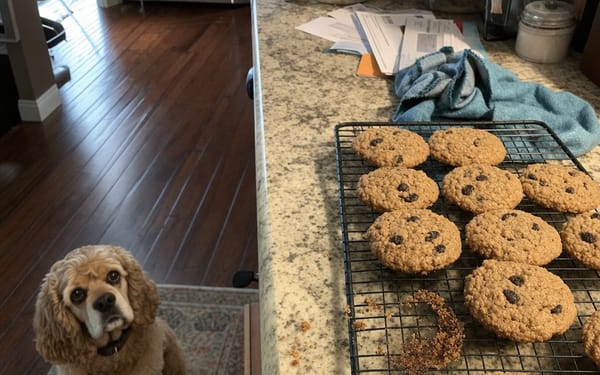
A pot brownie or weed cookie is two toxins in one bite: theobromine plus THC, and the THC dose is usually nothing like a recreational human serving. THC is fat-soluble, so cannabutter concentrates it into the fat phase of the batter — a home batch made with an eighth or a quarter ounce of flower can put 30–80 mg of THC into a single brownie against a 5–10 mg human dose. Dogs show signs from roughly 0.5 mg/kg, so for a 20 lb (9 kg) dog under 5 mg is enough. One brownie can be a seven- to eighteen-fold overshoot.
The picture is distinctive and comes on faster than chocolate: 30–90 minutes, versus 2–4 hours for theobromine. Look for static ataxia — the dog stands rooted, swaying like a metronome, unable to walk straight but not collapsed; urine dribbling while standing or lying down; hyperesthesia, a violent startle to a dropped spoon; widely dilated pupils; a slow heart rate; and a low body temperature. Signs commonly run 18–24 hours and, with a concentrated edible, can stretch to 72 hours.
The dangerous part is that the two toxins mask each other. THC sedates and slows the heart; theobromine agitates and speeds it. A dog that looks flat, cold and sleepy can still be running a theobromine tachycardia underneath the sedation — which is why these cases get an ECG and blood pressure monitoring, not a quiet kennel and time. Care is supportive: IV fluids, warming, anti-emetics, repeated activated charcoal (both compounds recirculate through the gut), and in severe or non-responsive cases intravenous lipid emulsion, which pulls fat-soluble THC out of the tissues.

Static ataxia and urine dribbling in a dog that startles at sound are close to diagnostic for THC — that combination is not what theobromine does. The distinction matters because a chocolate-only dog gets treated for a fast heart, and a dog with both gets watched for a slow one.
Assume a homemade edible is stronger than a dispensary one. The dose is unlabelled, it is concentrated in butter, and the batch was portioned by eye.
Chocolate-covered raisins, espresso beans, and macadamias

In all three, the coating is the smaller problem. Raisins can cause acute kidney injury at doses nobody can predict — injury has been reported around 0.045 oz per pound of body weight (about 2.8 g/kg), which is roughly 0.9 oz (25 g) for a 20 lb (9 kg) dog, while other dogs eat a whole box with no measurable effect. There is no safe-dose line to sit under, so any raisin ingestion is treated as an exposure. Chocolate-covered espresso beans are a double methylxanthine hit: about 6 mg of caffeine in each bean, plus the theobromine in the chocolate coating around it. Twenty beans into a 20 lb (9 kg) dog is roughly 120 mg caffeine and about 100 mg theobromine from the coating — around 25 mg/kg combined, squarely in the cardiotoxic band, and caffeine hits harder and faster than theobromine. Plain roasted coffee beans or grounds carry very little theobromine and are a caffeine problem dosed differently. Macadamias produce hind-limb weakness, tremors and fever, usually within 12 hours; ten nuts is about 0.9 oz (25 g), roughly 2.8 g per kg for that same dog.
| Filling | Main hazard | Rough threshold for a 20 lb (9 kg) dog | Timing |
|---|---|---|---|
| Raisins / sultanas | Acute kidney injury | No reliable safe dose; injury reported near 0.9 oz (25 g) | Vomiting 6–12 h; kidney values shift 24–72 h |
| Espresso beans | Caffeine plus coating theobromine | ~20 beans reaches ~25 mg/kg combined | 1–2 h, faster than chocolate alone |
| Macadamia nuts | Weakness, tremors, hyperthermia | ~10 nuts (~0.9 oz / 25 g) | 3–12 h, usually resolving 24–48 h |
| Peanut butter (sugar-free) | Xylitol hypoglycaemia | Under 1 tsp of some brands | 10–60 min, sometimes delayed 12 h or more |
Bring the packaging or a photo of the ingredient panel — filling weight and sweetener type change the plan more than the chocolate does.
Sugar-free chocolate and xylitol
A sugar-free or keto chocolate bar can be more urgent than the chocolate in it. Xylitol — often labelled birch sugar — triggers a massive insulin release in dogs, and blood glucose can crash within 10 to 60 minutes, producing weakness, wobbliness, collapse or seizures. With gum and some slower-release products onset can be delayed 12 hours or more, so a normal dog at hour two is not cleared; glucose needs checking on a schedule a clinic sets. Around 0.1 g per kg is enough for hypoglycaemia — under 0.04 oz (1 gram) for a 20 lb (9 kg) dog. Above roughly 0.5 g per kg the risk becomes hepatic necrosis, which can appear 24–72 hours later, including in a dog whose blood glucose never dropped at all. Read the ingredient list, not the "sugar alcohol" line on the nutrition panel: erythritol and maltitol are not the same hazard, and a bar can contain both.

Xylitol changes the clock. Theobromine gives you a couple of hours before signs; xylitol can drop blood glucose inside thirty minutes, and the liver injury shows up two days after the dog looks recovered.
Cocoa mulch in the garden: the exposure with no wrapper
Cocoa bean shell mulch is a by-product of chocolate manufacture. It smells strongly of chocolate for weeks after it is laid, dogs find it irresistible, and published analyses put its theobromine anywhere from 0.19% to 2.98% by weight — roughly 54 to 845 mg per ounce, a 15-fold spread between brands and processing runs. That means a mulch dose can only be calculated as a range. A 30 lb (13.6 kg) dog that eats 2 oz (57 g) has taken in somewhere between about 110 mg and 1,690 mg — 8 mg/kg at the mild end, over 120 mg/kg at the worst, which spans everything from a soft stool to a seizure risk. You cannot tell which bag you bought by looking at the ground, so the high end is the assumption to work from. This is also the exposure owners never suspect, because there is no wrapper and no missing food: the dog simply starts vomiting in the garden. If cocoa mulch is on your property and your dog is unwell, tell the clinic it is there.
White chocolate: barely any theobromine, and still a reason to call
White chocolate holds about 0.25 mg of theobromine per ounce. To reach 40 mg/kg, a 20 lb (9 kg) dog would need roughly 1,440 oz — 90 lb (41 kg) of white chocolate. Methylxanthine poisoning is not what a white chocolate dose produces, and on that one number the calculator is unambiguous. The rest of it is not. A white chocolate bar is a concentrated bolus of fat and sugar, and a large one is a recognised trigger for pancreatitis: hunched posture, repeated vomiting, refusal of food and abdominal pain, usually appearing 12 hours to 3 days later rather than the same evening. Miniature Schnauzers, Yorkshire Terriers, overweight dogs and any dog with a prior episode sit at higher risk. Add the foil and the plastic tray and a "harmless" white chocolate raid can still end at the clinic.

With white chocolate the theobromine maths is reassuring and the fat is not. A large fatty bolus is a recognised pancreatitis trigger, especially in Schnauzers, Yorkies and any dog that has had an episode before — watch for a dog that will not settle, will not eat, and stands with its front end down.
Foil, wrappers, and the advent calendar problem
Small amounts of foil often pass in the stool, but that is not something to count on. Cupcake liners, plastic advent trays, Easter basket grass and whole unopened wrappers do not reliably pass, and in a small dog a wad of packaging can cause a gastrointestinal obstruction that needs surgery days after the theobromine has cleared. Count the wrappers you can find — it is the best dose estimate you will get, and it also tells the clinic what went down whole.
The seasonal spike is real: Christmas, Easter and Halloween drive the bulk of chocolate calls, and they share one hazard. An advent calendar, a stocking or an Easter basket is eaten unobserved, often overnight. That means the time is unknown, and time decides everything: the decontamination window may already be gone, in which case the plan shifts from emptying the stomach to bloodwork, ECG, IV fluids and monitoring through the 12–72 hour tail.
Cats and chocolate
Cats are more sensitive to methylxanthines per kilogram than dogs and far smaller, so a few grams matters. They also cannot taste sweetness — they carry a broken copy of the Tas1r2 gene, one half of the mammalian sweet-taste receptor — so exposure is almost always cocoa powder, baked goods, or licking a bowl rather than eating a bar. That is why chocolate cases are overwhelmingly canine, not because cats tolerate it better. A cat that has eaten chocolate should be assessed, not watched.
Puppies, pregnant dogs, and dogs with heart disease or epilepsy
- Puppies — small body mass against an adult-sized find, no discrimination about what they swallow, and less reserve if they vomit repeatedly or become hypoglycaemic.
- Pregnant and nursing dogs — methylxanthines cross the placenta and are excreted in milk, so the litter is exposed too.
- Dogs with heart disease — existing valve disease or an arrhythmia means the cardiotoxic band effectively starts lower; a heart rate a healthy dog tolerates may not be tolerated here.
- Dogs with epilepsy — methylxanthines lower the seizure threshold, so a dose in the tremor band can produce seizures in a dog already prone to them.
- Seniors and dogs with liver or kidney disease — slower clearance stretches an already long half-life, so signs last longer and monitoring runs longer.
If your dog is in any of these groups, say so in the first sentence when you call. It changes the threshold at which anyone recommends being seen.
Chocolate protein bars, hot cocoa, and 'just a lick of the bowl'
Cocoa powder is the most concentrated chocolate most kitchens contain — roughly 400–737 mg of theobromine per ounce, overlapping baker's chocolate at the low end and reaching well above it at the high end. One tablespoon (about 0.18 oz / 5 g) is 70–130 mg, which for a 20 lb (9 kg) dog is 8–14 mg/kg: GI territory at worst. Half a cup (about 1.4 oz / 40 g) is 560–1,040 mg, or 62–115 mg/kg for that same dog — the seizure band. Chocolate whey protein powder is milder per scoop but comes in tubs a dog can open. Caffeine-fortified protein bars stack a coating on top of 100–200 mg of added caffeine, which for a small dog is the larger half of the dose. A mug of made-up hot cocoa is mostly milk and low in theobromine, but the box of sachets on the counter is not. A genuine lick of frosting from a bowl is a fat-and-sugar question rather than a theobromine one — worth weighing the dog and running the numbers rather than guessing which it was.
Weigh the container, not the crumbs. The difference between a tablespoon of cocoa powder and half a cup is the difference between an upset stomach and a seizure, and both look identical on the floor.
Send our toxicology specialist the wrapper, your dog's weight, and the time — you get the full dose calculation worked through with you, and what each band would mean tonight. Red-flag signs, baking chocolate or cocoa powder, or a sugar-free product mean the emergency clinic first.
Ask our specialistsSeven chocolate-toxicity facts most owners have never been told
None of this changes what you do in the next hour — the dose maths above does that. But these explain why chocolate behaves the way it does in a dog, and several of them are the reason a case that looked mild at midnight is still being treated at noon.
How to make this not happen again
Most repeat chocolate cases are the same house, the same dog, and a slightly different hiding place. Prevention that works is about barriers and habits, not about putting things higher up.

- Height is not containment. A medium dog on its hind legs reaches a standard kitchen counter, and a Labrador's nose finds a wrapped bar inside a zipped bag from across a room. "Up high" only works if there is also a door between the dog and the chocolate — a closed pantry, a latched cupboard, or the fridge.
- Guests' bags are the most common hidden source. Handbags, backpacks, gym bags and coat pockets routinely carry chocolate, protein bars, mints and gum — and the gum and mints may also contain xylitol, a separate and faster emergency. Give visitors somewhere to put their bag behind a closed door, and say why.
- Advent calendars, gift baskets and stockings are chocolate left at nose height for weeks. Hang calendars well above counter reach or keep them in a cupboard. Unwrap gift baskets the day they arrive — cellophane and ribbon are their own obstruction risk.
- Sort the Halloween or Easter haul on a table, never the floor. Kids, an open bag, candy spread over a rug is the classic setup. Store the bag in a closed cupboard afterwards, not on a bedroom shelf a dog can reach at 2am.
- Baking days are the highest-risk days in the house. Cocoa powder, chopped baker's chocolate and cooling brownies are the three most concentrated forms of theobromine there is, and they are out on the counter at once. Crate the dog or close the kitchen door until the surfaces are clear.
- Do not use cocoa bean shell mulch in a yard a dog uses. Pine bark, cedar or hardwood do the same job without smelling like a dessert. If a neighbour or landscaper has used it along a shared route, walk a different way.
- Teach "leave it" and "drop it" properly, and pay well for them. A restriction fails the one time a door is open; a trained response works in someone else's hallway. Practise with low-value items and trade up, so the dog learns that giving something up produces something better.
- Crate the dog or use a closed room during parties. Guests feed dogs, plates get set down, and front doors stand open. This is also the moment nobody is watching the coffee table.
- Weigh your dog and write the number and the date down. Every calculation on this page starts with body weight, and an estimate off by 30% moves a case between "monitor at home" and "go now". Most clinics will let you use their scale; a bathroom scale plus the hold-the-dog subtraction trick works for small dogs.
- Keep the wrapper. Photograph the package. Ounces, cacao percentage and whether it contained raisins, macadamias or xylitol are the difference between a precise dose and a worst-case assumption. The bin is the first place to look — before the drive, not after.
- 1Weigh the dog this weekWrite the pounds (and kilograms) and the date on the card below. Re-weigh growing puppies monthly.
- 2Find your nearest 24/7 emergency hospital before you need itNot the closest clinic — the closest one that is open at 3am. Note the drive time and whether they take walk-ins. Your own veterinarian's answering machine often names their after-hours referral hospital; write that name down.
- 3Put a card on the fridge doorYour own clinic's number and after-hours line; the 24/7 emergency hospital's number, address and drive time; ASPCA Animal Poison Control Center (888) 426-4435; Pet Poison Helpline (855) 764-7661; and your dog's current weight.
- 4Save both poison lines in your phone right nowAt 1am, with a wrapper in one hand, nobody searches well. A contact card takes twenty seconds to make today.
Where to get help right now
If your dog has eaten chocolate and you are reading this section first: call your own veterinarian or your nearest 24-hour emergency hospital, and call one of the two poison lines below. They are staffed around the clock by veterinary toxicologists, they will run the dose calculation with you, and they will speak directly to the treating hospital.
| Resource | How to reach it | Best for |
|---|---|---|
| ASPCA Animal Poison Control Center | (888) 426-4435 · aspca.org/pet-care/aspca-poison-control | 24/7 live veterinary toxicology advice, backed by the largest animal-toxicology case database in the world. A consultation fee applies (currently around $95). Best when the exposure is large, mixed, or the dog is already showing signs. |
| Pet Poison Helpline | (855) 764-7661 · petpoisonhelpline.com | 24/7 phone and live-chat toxicology support, charged once per incident (currently around $89) with follow-up calls included. Best when you expect repeat contact over the next day or two. |
| Merck Veterinary Manual | Chocolate Toxicosis in Animals · chocolate toxicity calculator | The clinical reference veterinarians use, free to read, with a built-in dose calculator. Best for checking the numbers on this page — note the threshold difference flagged under our dose-band table. |
| American Veterinary Medical Association (AVMA) | avma.org — household hazards · first-aid tips | The profession's own owner-facing guidance on household poisons and first aid. Best for a short, non-commercial second opinion on what counts as an emergency. |
| Cornell Riney Canine Health Center | vet.cornell.edu — Riney Canine Health Center | University-backed, plain-English canine health topics from a veterinary college, including first aid for poisonous substances. Best for depth without a product being sold to you. |
| AAHA hospital locator | aaha.org — find an accredited hospital | Finding an accredited practice near you; only about 15% of North American hospitals meet the standard. Best used before an emergency, when choosing a regular clinic. |
| VCA Animal Hospitals knowledge base | vcahospitals.com/know-your-pet | A large library of owner-level articles plus a nationwide network that includes 24-hour locations. Best for locating an open hospital in an unfamiliar city. |
| FDA Center for Veterinary Medicine | fda.gov — animal health literacy · recalls and withdrawals | Official U.S. consumer information on pet food, treats and medications. Use the second link when the exposure involved a product you want checked for a recall. |
Fees quoted are the published rates at the time of writing and can change; the lines will tell you the current charge before the consultation begins. Phone numbers are U.S. lines answered 24 hours a day, every day of the year.

The wrapper and a current weight are what turn an ingestion into a calculated mg/kg dose in under a minute. Without them the dose has to be assumed at the worst plausible amount, which means more monitoring and more cost for a dog whose real dose may have been low.
What treatment costs, and what each level buys
The figures below are typical US ranges as of 2026. Actual pricing varies widely by region, by whether it is a general practice during business hours or a 24-hour emergency hospital, and by how much treatment the dose requires. Ask for a written estimate before treatment begins; every clinic will provide one.
| What you are paying for | Typical US range | What it buys |
|---|---|---|
| Phone triage with a clinic or telehealth service | $0–$75 | A dose calculation and a clear read on whether the dog needs to be seen. Many general practices do this free for their own clients. |
| Animal poison-control case fee (ASPCA APCC or Pet Poison Helpline) | $85–$95 per case | A veterinary toxicology consult and a case number your clinic can call back on for free, for the life of the case. |
| Emergency exam / triage fee | $75–$200 | Being seen. Charged on arrival, before treatment, and separate from everything below. |
| Outpatient decontamination (emetic, activated charcoal, a few hours of observation) | $250–$700 | The standard treatment for a dog who arrives early with a moderate dose and goes home the same day. |
| Bloodwork and ECG | $150–$400 | Baseline chemistry and a rhythm assessment on a dog in the cardiotoxic range. |
| Overnight hospitalisation, 24 hours (IV fluids, repeated charcoal, monitoring) | $800–$2,000 | A moderate-to-severe case that needs the recirculation managed rather than waited out. |
| Severe case, 48–72 hours (tremors or seizures, beta-blockade, urinary catheter, intensive monitoring) | $2,000–$5,000+ | A high-dose ingestion with neurologic or cardiac complications in a 24-hour facility. |
Ranges are indicative and not a quote. Urban emergency hospitals and specialty centres sit at or above the top of these ranges; rural general practices during business hours are often well below them.
Sources for the numbers on this page
| Figure used here | Source |
|---|---|
| 17.5-hour canine theobromine half-life; 4.5-hour canine caffeine half-life; clinical signs and treatment | Merck Veterinary Manual, Chocolate Toxicosis in Animals — merckvetmanual.com |
| Human theobromine half-life of roughly 6–10 hours | Published human pharmacokinetic studies of theobromine (mean ~7.1 ± 2.1 h) |
| Dose bands (GI, cardiac, tremor, seizure) and reported lethal range of 100–200 mg/kg | ASPCA Animal Poison Control Center guidance and Merck Veterinary Manual; see the note under our dose-band table for where we are deliberately more conservative than Merck |
| Theobromine and caffeine per ounce by chocolate type | USDA FoodData Central composition data, cross-checked against the Merck chocolate toxicity calculator |
| Cocoa bean shell mulch at 0.19–2.98% theobromine by weight | Published analyses of processed cocoa bean shell mulch |
| Chocolate ranked fourth at 13.6% of exposures; holiday call-volume increases | ASPCA, Top 10 Pet Toxins of 2025 — aspca.org/news/top-10-toxins-2025 |
| Xylitol thresholds (0.1 g/kg hypoglycaemia, 0.5 g/kg hepatic risk) and cannabis figures | Pet Poison Helpline and ASPCA Animal Poison Control Center toxicology guidance |
Where sources disagree, this page states the disagreement rather than picking silently. Consultation fees and cost ranges are the published figures at the time of writing.

Tell our toxicology specialist exactly what your dog ate, what it weighs, and when — and we will work the dose out with you, in minutes, any hour of the night. If the dog already has red-flag signs, the emergency clinic comes first and we can run the numbers while you drive.
Get a specialist readFrequently asked questions
How much dark chocolate is toxic to a 10 lb dog?
Roughly 0.6 oz (17 g) of dark chocolate is the toxic dose for a 10 lb (4.5 kg) dog — about 20 mg/kg of theobromine at 150 mg per ounce. Above that: 1.2 oz (34 g) reaches the 40 mg/kg cardiac range, 1.8 oz (51 g) reaches 60 mg/kg where seizures begin, and a whole 3.5 oz bar is about 116 mg/kg, inside the reported lethal range.
How much chocolate is toxic to a 5 to 10 lb dog?
For a 5 lb (2.3 kg) dog, about 0.3 oz (8.6 g) of dark chocolate or 0.75 oz (21 g) of milk chocolate reaches 20 mg/kg. For a 10 lb (4.5 kg) dog it is about 0.6 oz (17 g) of dark or 1.5 oz (43 g) of milk. Any amount of baker's chocolate or cocoa powder in a dog this size warrants an immediate call.
How much chocolate is toxic to a 30 to 50 lb dog?
For a 30 lb (13.6 kg) dog, about 1.8 oz (51 g) of dark chocolate or 4.5 oz (128 g) of milk chocolate reaches 20 mg/kg. For a 50 lb (22.7 kg) dog it is about 3.0 oz (85 g) of dark or 7.6 oz (215 g) of milk. A true 70-85% bar reaches the same dose at roughly a third less.
How much chocolate is toxic to a 70 to 100 lb dog?
For a 70 lb (31.8 kg) dog, about 4.2 oz (120 g) of dark chocolate or 10.6 oz (300 g) of milk chocolate reaches 20 mg/kg. For a 100 lb (45.4 kg) dog it is about 6.0 oz (171 g) of dark or 15.1 oz (428 g) of milk. Large dogs still reach dangerous doses easily on baker's chocolate or cocoa powder.
How long after eating chocolate will a dog show symptoms?
Most dogs show the first signs 2 to 4 hours after eating chocolate, though onset can stretch to 6 to 12 hours after a large or fatty meal that slows stomach emptying. Vomiting, diarrhea, thirst and restlessness come first. Because theobromine's half-life in dogs is about 17.5 hours, signs can persist for 12 to 72 hours.
My dog ate chocolate but is acting normal — do I still need to call?
Yes. A normal-looking dog in the first two hours is a timing fact, not an all-clear: signs usually start at 2 to 4 hours and the stomach can only be emptied inside roughly the first 1 to 2 hours, so the quiet hour is when treatment works best. Work out the mg/kg dose and call your veterinarian or ASPCA Animal Poison Control on (888) 426-4435.
What if my dog ate chocolate 12 hours ago and is fine?
Twelve uneventful hours is a real signal, because onset is usually 2 to 4 hours and almost always inside 12. It is not an all-clear. Theobromine's roughly 17.5-hour half-life and its recirculation through the gut and bladder mean a large or very dark dose can still produce a racing heart or tremors. Call your vet with your dog's weight and the wrapper before you stop watching.
What are the first signs a dog ate chocolate?
The earliest signs are vomiting, diarrhea, excessive thirst, frequent urination, and restlessness, usually 2 to 4 hours in. As the dose climbs, a fast or irregular heartbeat, heavy panting, muscle tremors, a high temperature, stumbling and finally seizures follow. A dog that is trembling, collapsing or seizing needs an emergency clinic immediately; for anything less, call Pet Poison Helpline on (855) 764-7661 or your own veterinarian.
Can chocolate kill a dog?
Yes. Above roughly 60 mg/kg of theobromine dogs seize, and reported lethal doses sit around 100-200 mg/kg, though deaths have happened below that. Fatalities usually come from an uncontrolled arrhythmia, overheating during tremors, or aspiration of vomit during a seizure. Most dogs treated early recover fully. Small dogs and concentrated chocolate — baker's, cocoa powder, dark — are where deaths cluster. ASPCA Animal Poison Control: (888) 426-4435.
Is milk chocolate less dangerous than dark chocolate?
Per ounce, yes: milk chocolate holds about 44-60 mg of theobromine versus 150-160 mg in dark baking chips, 225 mg in a 70-85% bar, and 390-450 mg in baker's. Per incident, not always, because dogs eat far more milk chocolate. A 50 lb (22.7 kg) dog needs roughly 7.6 oz of milk chocolate to reach 20 mg/kg, but only about 3 oz of dark.
Is any amount of chocolate safe for a dog?
There is no amount that is beneficial, and no amount that is guaranteed harmless. Below about 20 mg/kg of theobromine a healthy adult dog is unlikely to show more than mild GI upset, which is why a single milk-chocolate chip in a large dog is a soft-stool question rather than an emergency. A sensitive dog can still vomit on far less, and the same piece in a small dog can be a real dose.
How this article was written
Wikipropedia's specialists are AI veterinary personas. Each one is labelled “Virtual DVM” and built around the clinical scope of a real board specialty. They are not licensed individuals, and this article is not a diagnosis. It is general veterinary information, written to be specific enough to act on and checked against published veterinary toxicology sources.
- Sources. Dose thresholds and treatment steps follow published veterinary toxicology references. The organisations we point you to are listed under Where to get help.
- What it can't do. No article can examine your dog. Weight, timing, the exact product and your dog's health history all move the answer — which is the reason the specialist chat sits beside this page.
- Human review. A licensed DVM sign-off is pending for this article. Until it lands, treat the clinical detail here as specialist-reviewed AI guidance.